
Kerala Solar Installation Process: Survey, KSEB and Handover
See who does what from bill review and KSEB feasibility through installation, commissioning and the records you should receive at handover.
By Solwiz Energy Team. Reviewed as organizational guidance by Solwiz Energy.
The process has three decision-makers
The customer, installer and KSEB each control different parts of a grid-connected rooftop project. Solwiz can design and install the agreed system and support the documentation workflow, but KSEB controls technical-feasibility, inspection, agreement, metering and commissioning decisions. Government authorities control subsidy rules and release.
The KSEB Solar Rooftop Portal is the state's single-window portal for grid-connected rooftop applications. Always follow its current instructions; old PDFs can be useful background but may not reflect every current screen or requirement.
Step 1: Bill and preliminary review
Share recent electricity bills, consumer category, sanctioned load, roof photos and the main goal: bill reduction, selected-load backup or both. This produces a preliminary capacity and system-type discussion, not a final installable design.
Customer: provides accurate account and usage information. Solwiz: explains initial options and unresolved assumptions.
Step 2: Site survey
The survey checks usable unshaded area, roof condition and access, mounting options, cable route, inverter and battery location where applicable, existing distribution boards, earthing, meter position, waterproofing interfaces and maintenance access.
Survey findings should update the proposal. A generic package should not override actual site constraints.
Step 3: Written proposal and responsibility split
The quotation should identify capacity, equipment, structure, protection, monitoring, generation assumptions, price, taxes, exclusions, payment stages, warranty information and support path. It should also state who prepares and submits each approval record and which utility or statutory fees are outside the installer's price.
Read the quotation comparison guide before accepting only a price-per-kW headline.
Step 4: Application and technical feasibility
For grid-connected work, complete the current KSEB/portal steps before installation where required. The live process can include consumer registration, an interconnection application, fees, technical-feasibility review and plant registration. Eligible residential consumers following the subsidy route must also satisfy current national-portal requirements.
KSEB: decides technical feasibility. Customer: completes declarations and account-specific actions. Solwiz: can support the agreed document and technical inputs.
Step 5: Installation and internal checks
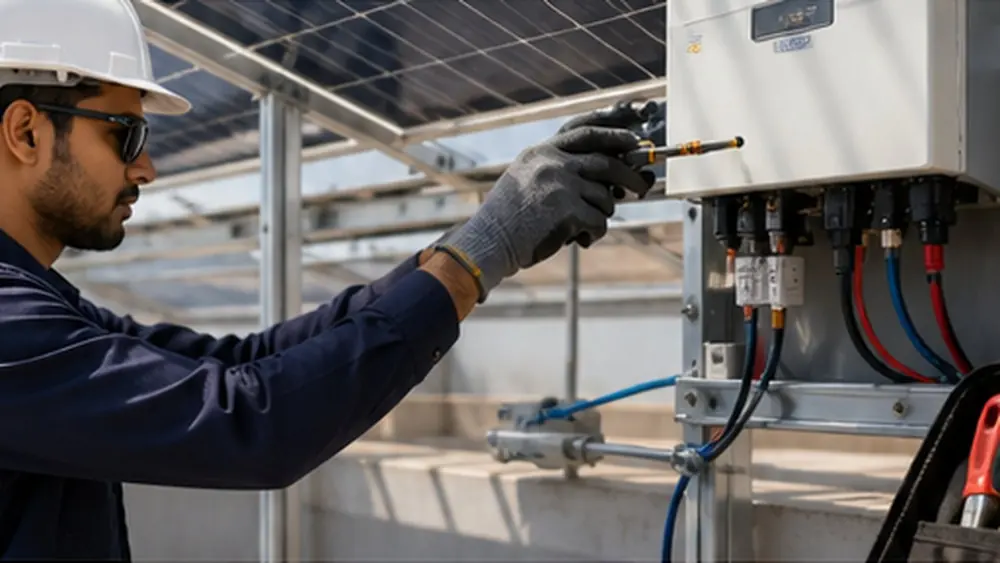
After the required pre-installation approvals, technicians install the mounting structure, modules, inverter, cabling, isolation, surge protection, earthing, monitoring and any agreed backup circuits. The team should check mechanical fastening, cable management, polarity, labels, protection, inverter setup and monitoring before requesting utility commissioning steps.
Physical installation time depends on capacity, roof work, weather, access and electrical changes. It should be quoted separately from approval time because Solwiz does not control the utility's queue.
Step 6: Completion evidence and KSEB process
The current route may require project-completion information and supporting records, followed by KSEB review, testing or inspection, agreement and meter work. Deficiencies can pause the process. Do not treat an estimated approval date as a guarantee.
For the subsidy route, commissioning does not by itself guarantee central-assistance release; eligibility and completion evidence still pass through the applicable official process.
Step 7: Commissioning and customer handover
Do not finish with only a switched-on inverter. The handover should include, as applicable:
- Monitoring access and a basic explanation of normal generation behaviour
- Module, inverter and battery details and serial records
- Applicable product and workmanship warranty documents and exclusions
- Final capacity and equipment schedule
- Approved or final project records available for the installation
- Safety shutdown guidance and labels
- Cleaning and visual-inspection guidance
- Sales and support contact details
Keep these records with the quotation, invoices, payment evidence and portal records. See solar maintenance service for the post-installation support path.
What can delay the project
Incomplete consumer records, an unsuitable roof, required electrical upgrades, equipment substitutions, portal deficiencies, inspection observations, meter availability and authority processing can all affect the schedule. A transparent project plan distinguishes work Solwiz controls from steps controlled by the customer or utility.
FAQs
How long does solar installation take in Kerala?
Physical installation can be quick for many homes, but approvals, net-metering and commissioning timelines depend on site readiness and utility process.
Do I need a site visit before quote?
A preliminary quote can start from bills and photos, but a site visit is important before final installation scope.